

VOICE 185
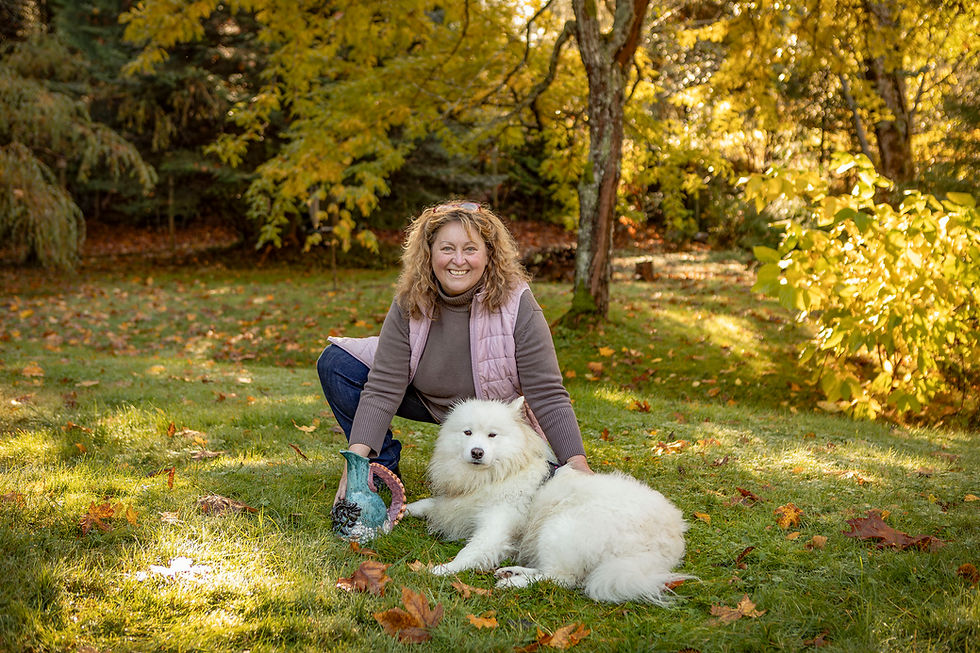
Arzeena Hamir and Neil Turner,
Owners of Amara Farm
Photography - HIRO Interview - MINA

“Amara Farm is about community on many different levels, from communities of plants and people to our supporters and customers. At its heart, it’s about building community. It’s also about reconnecting with some of life’s fundamental truths. Farming has so much to teach us. You have to touch it, smell it, and feel it.”
Arzeena Hamir is one busy woman. She’s a farmer, co-owner of certified organic Amara Farm with her husband Neil, and a familiar face in the community. After serving as Electoral Area B Director from 2018 to 2022, she has just been re-elected to the position.
With so much going on, you might wonder how she finds time for it all. Yet Arzeena always seems to make time for others, whether it’s lending a hand, helping out with a small favour, or sitting down for a chat with VOICE.
So, who is Arzeena beyond her many roles?
She didn’t grow up on a farm. Raised in suburban Richmond, she developed a love of plants in high school while dreaming of working overseas in community development. A suggestion from her biology teacher led her to study agriculture at the University of Guelph, where she majored in crop science and minored in tropical agriculture.
It was there, on a field trip to Jamaica, that she met Neil. Their shared interest in working overseas took them to Thailand. There, seeing firsthand the challenges sugarcane farmers faced with chemical-based farming sparked her interest in organic agriculture. This eventually led her to pursue a master’s degree in sustainable agriculture in England.
Back in Canada, a turning point came in 2008, during the financial crisis, when she witnessed something she had never seen before: people hoarding food. People were stockpiling groceries, and supermarket shelves were standing empty. It made her and Neil question how vulnerable the food system really was and whether growing food themselves could be part of the answer.
Although she had studied agriculture, learning to farm in practice was a whole different experience. What began with growing food in other people’s backyards gradually grew into something bigger. In 2012, they brought their family to the Comox Valley and began a new chapter as farmers.
Today, much of Arzeena’s life still revolves around growing things, not just plants, but connections between people, farmers, and the wider community. Talking with her, it becomes clear that farming has always been about more than what grows in the field. It’s about how we live, how we care for the land, and how we care for one another.
VOICE (V): Why did you choose the Comox Valley?
Arzeena (A): Originally, we were looking for land closer to Richmond, where I used to live. But I had actually come to Comox to work on a farm when I was eighteen, so I always had a soft spot for this area. As it turned out, the farm where I had worked was just across the highway from our property!
There were other things that attracted us to the community, too. When we first came looking for a farm here, one thing I noticed was that I couldn't find a Starbucks! Instead, downtown Courtenay had about ten coffee shops serving organic, fair-trade coffee. The farmers' market was also very strong for a community of this size. There were around eighty farms participating, which showed us that there was a real demand for local food.
There was also a documentary film festival called The World Community focused on social activism and communities around the world. All these things made me feel connected to the people and values of this area.
We didn't know anyone when we first moved here, but the organic growers and other farmers welcomed us very quickly. People started getting to know us at the farmers' market, and I volunteered a lot in the community. It was surprisingly easy to become part of the community.
V: How did you get started with the farm?
A: We bought the property in 2010, and initially, my in-laws moved into the old house.
Neil and I would come up with our daughters about once a month. We would tend to the land, plant garlic, and then head back home. At that time, we were still trying to pay off the property.
When we finally moved here, Neil was still working on the mainland, so it was just my daughters and me living on the farm. The previous owners weren't certified organic, so it took us four years to complete the transition to organic farming.
The entire field was covered in grass, with a couple of old barns and three greenhouses on the property. Converting the grassland into a farm was a slow process. I started with two greenhouses and built a deer fence around the property. Then I gradually expanded the farm, little by little. Our first crop was garlic. That's how we started.
V: What is your farming philosophy?
A: We wanted to become certified organic because it aligned with how we believed farming should be done. The certification also helped us connect with the local community. We didn't know many people when we first arrived, and becoming certified helped us build relationships with other organic farmers.
Our goal was always to grow food for our local community. We weren't interested in growing crops to export to Vancouver or elsewhere.
We also believe strongly in diversity. Rather than focusing on a single crop, we grow a wide variety of crops. That way, if one doesn’t do well in a particular year, we still have others to fall back on.
Another important part of our philosophy is that we really don't like spraying anything, even organic sprays. Although organic sprays are permitted, we choose not to use them. We're surrounded by beautiful forest, and we have lots of pollinators and beneficial insects. By encouraging biodiversity, we rarely have serious pest problems.
V: What makes Amara Farm unique?
A: I think we've built our reputation by staying true to our values and our approach to organic farming.
People also know us for our commitment to supporting other local farms. We work cooperatively with other farmers whenever we can, and we believe that supporting one another is essential to building a strong local food system.
I also have strong values when it comes to politics and community involvement. We're very transparent about what we believe in, and people know that when they buy from us, they're supporting not just our farm, but also the values we bring to the community.
We're known for our garlic and blueberries, but people also appreciate the diversity of what we grow.
V: What is the Comox Valley community like?
A: I think the Comox Valley attracts people who really care about their community and want to give something back. There's a tremendous amount of volunteerism here, and there are more than two hundred nonprofit organizations in the area. Whatever your interests are, chances are there’s a group here that shares them. When I first moved here, I was serving on six different boards!
Each community also has its own character. Cumberland is where a lot of the arts, culture, and music happen. Courtenay has a nice nightlife, and Comox has some lovely places to get fish and chips. And then there's the natural beauty. You're never more than about fifteen minutes away from somewhere beautiful in nature.
What really stood out to us, though, was how generous people were. When we first moved here, our neighbour across the road was constantly coming over to help us and build things. Other farmers shared all kinds of things with us, too.
That spirit of generosity made a huge difference when we were starting.
V: What is the most rewarding and the most challenging part of being a farmer?
A: One of the most rewarding things is hearing people tell us how much they enjoy the food we grow. I feel a real sense of responsibility, but I also love the connection that food creates between the people who eat it.
The challenging part is that running a farm can be like having a small baby. It takes up so much of your time and energy, and at times, it can feel overwhelming.
That's why I think setting boundaries is really important. We need to look after ourselves physically and mentally if we want to keep farming for the long term.
I want to see farmers build sustainable lives, not just sustainable farms.
V: How are environmental and social factors influencing the way we farm today?
A: I think the environmental impact of industrial farming, along with its effects on people's health and the low wages often paid to farm workers, is becoming increasingly difficult to accept. Unfortunately, we still don't have enough alternative farmers to replace that system.
At Amara Farm, we want to show that it’s possible to grow organic food for our local community while paying people a living wage. It’s not easy, but it can be done.
We're also seeing how vulnerable the industrial food system can be to climate change and global events. We've relied heavily on inexpensive food coming from the United States, but I think we're starting to see the end of cheap food. So the question is: what will replace it?
I hope that we will have greater access to locally grown food produced in environmentally responsible ways. Interestingly, prices for locally grown food are becoming more comparable to those sold at supermarkets. For example, we sell celeriac for $5, compared with $9.50 at some supermarkets.
I believe local food production can help communities weather future price increases and disruptions. I hope small-scale farmers can play a vital role in helping their communities weather the challenges ahead.
V: What led you to get involved in politics?
A: I first got involved in politics in 2018, largely because of an agricultural issue.
At the time, the regional district was considering building a convention centre on the exhibition grounds, where the farmers' market was located. The land was set aside for agriculture, and I felt very strongly that it should be used to grow food, not to build a convention centre.
I was initially motivated by frustration, but I also wanted to bring issues like food security and environmental protection into the political conversation.
During that term as a Director of Regional District B from 2018 to 2022, we accomplished quite a bit. In 2018, we established a food policy council. We also helped create opportunities for people in Courtenay and the regional district to grow food and sell their produce right from their driveways. Over the past couple of years, I've seen so many people selling produce at the end of their driveways, and I think that's wonderful. It helps people connect with their neighbours while strengthening our local food system.
I want our local government to reflect my values, and I know many people in this community share them. I'm running again because the issues that matter most to our community still need attention, especially water security for farmers, climate change, and food security. We know these challenges are coming, and we need to prepare for them before they become crises.
I would also love to see more farmers get involved in politics. Farmers should have a meaningful voice in decisions that affect their livelihoods and the future of agriculture.
V: What does food mean to you?
A: Food becomes part of every single cell in my body. It's nourishment, but it's also pleasure. I love the flavours of food, and I love cooking. But what matters most to me is the connection between the food we eat and the land it comes from.
Plants draw their nutrients from the soil, and when we eat them, those nutrients nourish our bodies. I find that connection incredibly intimate and meaningful. That's why I feel so strongly about protecting the land. What comes from the land ultimately becomes part of us.
For me, food is a physical, spiritual, and ecological connection. I hope everyone can experience that kind of connection when they eat.
I also think we need to acknowledge that, as farmers working on what we call “our own land,” we're farming on stolen land. There's no getting around that fact.
I don't have all the answers about what reconciliation should look like. But I hope we can learn to steward the land in ways that reflect some of the principles of First Nations land stewardship, including restoring abundance and working with diversity.
Neil(N): First Nations people have long understood that food is medicine. In Western society, we tend to think of food and medicine as two distinct things.
I think we need to change the way we think about food. Food is something we need to live. It's fundamental to our health and well-being. We've increasingly treated agriculture as a business, but food is a necessity of life. I think we need to recognize that providing food is about much more than making a profit.
V: How did Amara Farm get its name?
A: We named the farm after our two daughters, Amina and Inara.
In my family’s language, Amara means “ours,” while in Arabic, it means “gift.” So the name has a very personal meaning for us.
V: What do you see for the future of Amara Farm?
A: One of the things I really enjoy is seeing more people gain access to land.
I would love to see more young people getting involved in vegetable production. We have plenty of space here, and we would love to welcome more people to the farm.
I would also like Amara Farm to be an example for other farmers, especially those who are struggling to keep their farms going. If we can show that sharing land and resources can make it easier for more people to grow food, hopefully we can inspire others to do the same.
N: We would also like to expand our range of value-added products. We've recently acquired a new dehydrator, so we would love to start offering herbal and fruit teas.
One of our interns, Natasha, is growing traditional First Nations plants. We see this as a way to build connections, support reconciliation, and help increase recognition of Indigenous knowledge. Agritourism is another possibility we would like to explore in the future.
V: What advice would you give to young people who want to become farmers?
A: This might sound counterintuitive, but my first piece of advice is to get a job.
Don't expect farming to provide your entire income when you're first starting.
Having another job can actually help you use your time on the farm more effectively. When time is limited, you have to focus on what matters most. Sometimes I see farmers spending time on little things that don't necessarily add much value to their farms. It's worth asking yourself: Is what I'm doing actually adding value to the farm?
Having another source of income gives you more financial security while you're getting the farm established.
My second piece of advice is to start small. Amara Farm didn't become what it is today overnight. We expanded gradually, moving from one field to the next.
You need to stay on top of your finances. Which crops are profitable? How much labour does each crop require? You need to understand the economics of what you're growing.
And build a community around you. Farming was never meant to be a job that one person does entirely alone. It's much more enjoyable when you can work together with friends and family.
N: Have a hobby. Maybe it's fishing, playing soccer, or something else you enjoy.
If you pour your whole self into farming and nothing else, you risk burning out.
You also need to be prepared to fail. You will experience crop failures because so much depends on the weather. The key is to be flexible and ready to change direction when things don't work out. Never put all your eggs in one basket.
And finally, protect your mental health. Learn to laugh, even when things go wrong.
Farming is challenging, but it should also bring you joy.


Amara Farm
Arzeena and Neil started Amara Farm in 2012 with a dream of growing healthy food for their neighbours. It began with vegetables, and in 2014 an acre of blueberries joined in. The farm became certified organic in 2015, and has since won the Land of Plenty Award (2018) and the Comox Valley Record’s Best Market Vendor (2019). Now a new orchard of apples, pears, and hazelnuts is growing, and garlic remains a farm specialty.




SUPPORTED BY